Projects
We advocate for a more effective housing system. Our vision is that all people living in Western Australia have housing that enables them to thrive.

We advocate for a more effective housing system. Our vision is that all people living in Western Australia have housing that enables them to thrive.
Short-term Rental Accommodation Report: Death by 10,000 Cuts
Across Western Australia there are almost three (3) unhosted Airbnbs for every available long‑term rental, and in regional areas, that figure rises to 15 to 1.

Death by 10,000 Cuts, published by Shelter WA, examines the impact of short‑term rental accommodation on housing availability and affordability across Western Australia.
Using detailed suburb‑level analysis from metropolitan and regional WA, the report shows how the rapid growth of unhosted short‑term rentals is diverting homes away from the long‑term rental market and intensifying the state’s housing crisis.
The report makes the case for urgent action and outlines seven evidence‑based recommendations to rebalance the housing system and return homes to the long‑term rental market.
To read the full report and access all media related to the release, visit the project page here.
Income Eligibility Research Project
Shelter WA’s Income Eligibility Research Project investigates the impact of current social housing income eligibility limits in WA; looking at whether amending these policies would remove barriers preventing social housing tenants from accessing and retaining employment, and in doing so relieve poverty and unlock an untapped labour force to fill critical labour shortages.
This research project includes:
The Australian Housing and Urban Research Institute (AHURI) have been contracted to undertake the research on behalf of Shelter WA.
Project activities are overseen by a steering committee consisting of lived experience advocates, as well as representatives from community housing, tenant advice and advocacy services, the Department of Housing and Works, peak bodies and homelessness service providers.
Community Housing Futures WA Program
In the 2025 budget, the Western Australian Government committed $6 million over 4 years to deliver the Community Housing Sector Capability Program, known as the Community Housing Futures WA (CHFWA) Program. Shelter WA is pleased to be delivering this program.
Access the CHFWA website here.
The main objectives of this Program are:
The grant includes three streams:
No. The aim of the Program is to support registered and aspiring CHOs to grow their capacity and capability. The program aims to meet CHOs where they currently stand in terms of organisational development and capability.
The Program Team is currently designing and embedding the Program Plan and governance arrangements. A panel of advisors will be established and we anticipate the Capacity and Growth Assessment grants round to open in quarter 2 of 2026.
Please continue to check back on this page – we will update it with further information as we progress with the project, and will also share news through our Newsletter and Member Update emails.
Boarders and Lodgers RTA Reform
Boarders and Lodgers – Residential Tenancy Act Reform Project
Shelter WA is undertaking sector-wide consultation on potential reforms to the Residential Tenancy Act relating to boarders, lodgers and rooming house residents.
This project is funded by the Department of Local Government, Industry Regulation and Safety (LGIRS) – Consumer Protection Division to ensure that any proposed reforms provide appropriate protection for the rights of boarders and lodgers while maintaining the necessary flexibility for lessors and accommodation providers.
This project will:
Shelter WA is currently working with LGIRS to finalise the detailed project timeline. A full project plan will be shared in the coming weeks with anyone interested in staying informed or participating.
Over the coming months, key stakeholders will be invited to take part in workshops and focus groups.
As of June 2026, Sector‑wide consultation have begun and will continue through to October 2026.
ACHO Capacity Building Project
Shelter WA was awarded a COVID-19 Grant by Lotterywest to deliver the project and build the capacity of the four-WA based Aboriginal community housing organisations.
The project focused on optimising the ACHO’s current assets, build on their professionalism and through a peer-to-peer learning approach build collective capability supported by the technical expertise shared across the organisations.
The four ACHO’s included one metro provider Noongar Mia Mia, and three regional providers namely Murchison Region Aboriginal Corporation (Geraldton), Goldfields Indigenous Housing Organisation (Goldfields) and Southern Aboriginal Corporation (Albany).
Building on the groundwork of the that first stage – Shelter WA gained the support of the Sisters of St John of God (SSJG) to continue the project. On Thursday, 9 March 2023 Shelter WA launched the Aboriginal Community Housing Organisation Partnership Prospectus.
Housing unlocks opportunity, enhances health and wellbeing and provides access to educational and employment options. It enables people to fully participate in community life.
Long-term sustainability was explored through quality audits with the providers to qualify for registration through the community Housing Regulatory Framework and support was also provided for the ACHOs to explore alternative funding.
A key project deliverable also included developing this prospectus for the four providers, outlining opportunities for partnerships with private-sector businesses, industry, philanthropists, community services and government agencies to partner with ACHOs and details the transformative benefits these partnerships can have on the lives of Aboriginal people, families and communities.
ACHOs offer a range of housing options and culturally sensitive housing services, working to empower Aboriginal people through supporting them meet their housing needs.
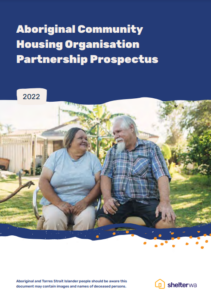
At the launch event on Thursday, 9 March 2023 view the speeches of,
Homelessness Week (Annual Campaign)
Homelessness Week (Annual Campaign)
Homelessness Week is an annual campaign led by Shelter WA to raise awareness of homelessness, amplify lived experience voices and advocate for long‑term housing solutions. Each year, we bring together government, community organisations and the public to highlight the systemic issues that contribute to homelessness and the actions needed to address them.
Through events, forums, storytelling and sector collaboration, Homelessness Week has strengthened awareness across Western Australia and supported momentum for meaningful housing and homelessness reform.
For more information on previous Homelessness Weeks, please see the Homelessness Week main page.
Homelessness Knowledge Training for Local Government Council Members (Completed December 2025)
In 2025, Shelter WA partnered with leading Australian expert in local government and homelessness, Leanne Mitchell, to design and deliver Homelessness Knowledge Training specifically for local government Council Members across Western Australia.
Offered as a free, one-off session in December 2025 following the WA Local Government elections, the training recognised the ongoing importance of homelessness as an issue faced by councils statewide.
This tailored program built on Shelter WA’s existing training offerings but was customised to give newly elected and returning Council Members a strong foundational understanding of homelessness in Western Australia, including:
Project activities were guided by a steering committee consisting of local government representatives from across WA, the WA Local Government Association and Local Governments Professionals.
The training session itself was delivered alongside Lived Experience advocates, sector specialists, and experienced Councillors. An open “ask anything” Q&A panel enabled attendees to engage directly with experts, enhancing their practical knowledge. Participants received a certificate confirming their completion of the training.
To ensure the longevity of the training, a recording was made available on the Local Government Homelessness Knowledge Hub so that Council Members can access the training session at any time.
This project was funding through a Lotterywest Peaks Capacity Building Grant administered by the WA Council of Social Services.
Start date: July 2025
End date: December 2025
The HOME Project (Completed December 2025)
The HOME Project was a collaborative initiative designed to improve housing and support outcomes for people experiencing or at risk of homelessness in Western Australia. Through partnerships with service providers, local organisations and people with lived experience, the project focused on strengthening service coordination, identifying gaps and developing practical solutions that improve pathways into safe, stable housing.
The project contributed to greater sector alignment and enhanced understanding of how housing, health and social supports can work together to prevent homelessness and sustain long‑term tenancies.
Building Tenancy Skills (Completed November 2024)
Shelter WA, in a partnership with People with disabilities WA (PWdWA) have worked together since September 2021 on the Building Tenancy Skills Project. With a team of thirteen people with personal experience of disability and renting, we have codesigned resources that help tenants with disability feel more confident about their rights and responsibilities as tenants. Our codesign partners have also included Circle Green, the Financial Counsellors Association of WA, Consumer Protection, Developmental Disability WA and REIWA.
The Building Tenancy Skills Project ran from 2021-2024 and is now complete. You are welcome to download and use the tenancy resources including videos and fact sheets.
Infection Control Program (Completed January 2024)
Shelter WA delivered infection control expertise through our Infection Control Program (ICP).
Available to WA non-clinical residential and non-residential homelessness services, community housing organisations and congregate living facilities ICP provides ongoing infection control management not just for COVID-19 but other pathogens.
This project was completed in January 2024.
All resources for this project can be found on our Members Hub.
To join Shelter WA as a member, find out more here.
ACHO Sector Strengthening Project (Completed October 2023)
Shelter WA were delighted to receive funding from the Department of Communities for an Aboriginal Community Housing Organisation (ACHO) Sector Strengthening project for one year, with the project officially commencing in October 2022.
Connecting with ACHOs in WA and bringing the ACHO sector together for peer-to-peer knowledge sharing, resource exchange and relationship building, which will lay the foundations for the establishment of WA ACHO peak body, were key deliverables for the project. WA is one of the only states not to have an operational ACHO peak body, which has made connection and information sharing between ACHOs challenging.
The National Aboriginal and Torres Strait Islander Housing Association (NATSIHA) supported the development of an ACHO peak body in WA, supported by the WA NATSIHA Director, Tina Ugle (formerly Pickett), Managing Director of Noongar Mia Mia, and Ivan Simon, Co-Chair of the National Aboriginal and Torres Strait Islander Housing Association (NATSIHA).
The project also supported the Department of Communities’ request for feedback from WA Aboriginal Community Controlled Organisations (ACCOs) and ACHOs on the draft Aboriginal and Torres Strait Islander Community Controlled Housing Organisation Sector (ATSICCHO) discussion paper which is following on from the national Housing Sector Strengthening Plan under Closing the Gap.
Shelter WA was proud to be supporting the growth and sustainability of the ACHO sector in WA to ensure that all Aboriginal people in Western Australia have access to culturally safe and appropriate homes that enable them to thrive.
Certificate IV in Housing – Sector Professionalisation Project (Completed September 2023)
Certificate IV in Housing – Sector Professionalisation Project (Completed)
Shelter WA supported the development and introduction of Western Australia’s first Certificate IV in Housing (CHC42221), delivered by North Metropolitan TAFE (NMTAFE). This project strengthened the professionalisation of the social and affordable housing sector and improved pathways for new and existing workers.
The Certificate IV in Housing was scoped and developed following strong grassroots advocacy from the WA community housing sector and with the support of the Department of Communities and the Ministers for Housing and Training. Western Australia had previously been one of the few states without this qualification available.
Shelter WA managed and acquitted the project through funding from the Western Australian Council of Social Service (WACOSS) Peaks Capacity Building initiative. A consortium of sector leaders from Housing Choices WA, Foundation Housing, Community Services at NMTAFE and Shelter WA contributed tenancy management, property management and community services expertise throughout the development process.
To ensure the qualification reflects Western Australian housing and homelessness contexts, Shelter WA established a Certificate IV Steering Group. The group included representatives from:
This collaboration ensured that course materials were contemporary, relevant and responsive to the needs of the sector.
The Certificate IV in Housing provides comprehensive training for workers involved in tenancy and property management across community and public housing. The qualification supports:
The course covers areas such as tenancy sustainment, legislative compliance, communication, property management, and supporting individuals with complex needs.
A Shelter WA survey of Community Housing Organisations in 2022 found:
This demonstrated clear need for formalised training and career pathways within the housing workforce.
Through this project:
The project concluded in September 2023, with the qualification formally launched at a breakfast event on 19 September 2023. Delivery commenced in Semester Two, 2023 (October start).
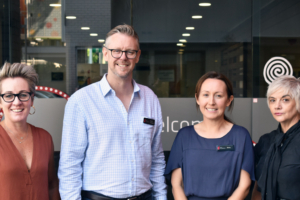
[L-R] Natalie Sangalli, General Manager Housing Choices WA; David Pelusey, Director of Community Services and Olivia Ross, Acting Principal Lecturer of Community Services at NMTAFE; Mariana Logan, Housing Services Manager, Foundation Housing

Preparation Meeting

Preparation Meeting
Health and Isolation Response Grants (Completed December 2022)
Shelter WA in partnership with Western Australian Council of Social Service (WACOSS) secured funding from the West Australian Department of Health.
Grant funding was made available on a reimbursement basis for not-for-profit community housing or homelessness services with a WA Government contract. The expenditure of funding was for activity directly related to the treatment and management of people experiencing homelessness or housing insecurity who have tested positive for COVID-19.
Project was completed in December 2022.
Local Government Homelessness Knowledge Hub (Completed June 2022)
Local Government Homelessness Knowledge Hub (Completed)
Shelter WA established the Local Government Homelessness Knowledge Hub to strengthen the capacity of Western Australian local governments to respond to homelessness in their communities. The project supported councils with practical tools, guidance and evidence to help them play an informed, coordinated and effective role in local homelessness responses.
Local governments across WA are increasingly involved in addressing homelessness, yet many face challenges such as limited resourcing, unclear responsibilities and a lack of accessible guidance. The Knowledge Hub was created to:
The project compiled a wide range of resources tailored to the needs of local governments, including:
The Hub acted as a practical, easy‑to‑use reference point for both metropolitan and regional councils.
Through this project, local governments were better equipped to:
The Knowledge Hub contributed to more consistent, coordinated and informed local responses across Western Australia.
The Local Government Homelessness Knowledge Hub was delivered as part of Shelter WA’s broader advocacy work to strengthen partnerships between local governments, service providers and state agencies. The Hub remains a legacy resource supporting improved homelessness responses across the state.
ACHO Capacity Building Project
Shelter WA was awarded a COVID-19 Grant by Lotterywest to deliver the project and build the capacity of the four-WA based Aboriginal community housing organisations.
The project focused on optimising the ACHO’s current assets, build on their professionalism and through a peer-to-peer learning approach build collective capability supported by the technical expertise shared across the organisations.
The four ACHO’s included one metro provider Noongar Mia Mia, and three regional providers namely Murchison Region Aboriginal Corporation (Geraldton), Goldfields Indigenous Housing Organisation (Goldfields) and Southern Aboriginal Corporation (Albany).
Building on the groundwork of the that first stage – Shelter WA gained the support of the Sisters of St John of God (SSJG) to continue the project. On Thursday, 9 March 2023 Shelter WA launched the Aboriginal Community Housing Organisation Partnership Prospectus.
Housing unlocks opportunity, enhances health and wellbeing and provides access to educational and employment options. It enables people to fully participate in community life.
Long-term sustainability was explored through quality audits with the providers to qualify for registration through the community Housing Regulatory Framework and support was also provided for the ACHOs to explore alternative funding.
A key project deliverable also included developing this prospectus for the four providers, outlining opportunities for partnerships with private-sector businesses, industry, philanthropists, community services and government agencies to partner with ACHOs and details the transformative benefits these partnerships can have on the lives of Aboriginal people, families and communities.
ACHOs offer a range of housing options and culturally sensitive housing services, working to empower Aboriginal people through supporting them meet their housing needs.
At the launch event on Thursday, 9 March 2023 view the speeches of,
Aboriginal Housing and Health
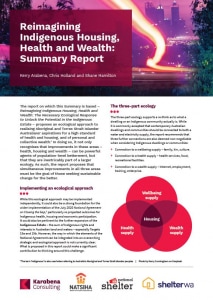
Shelter WA received a grant from the Australian Government Department of Health to undertake a review of Indigenous housing policy and programs, reviewing the intersection of housing and health policy, and to provide information on the policy changes required to deliver better housing and health outcomes. Shelter WA and National Shelter appointed PwC’s Indigenous Consulting Pty Limited
A governance group was created in partnership with National Shelter and the National Aboriginal and Torres Strait Islander Housing Association to oversee this project. PWC’s Indigenous Consulting in partnership with Karabena Consulting were contracted to undertake this work. Shelter WA would like to acknowledge and to thank the Commonwealth and the Department of Health for their support of this project along with all the project participants for sharing their knowledge and insights.
Aboriginal Housing Forum
The Aboriginal Housing Forum, hosted by Shelter WA, brought Aboriginal leaders and community members together to address the urgent shortage of safe, affordable and culturally appropriate housing for Aboriginal people in metropolitan Perth. The forum highlighted that while government policy often focuses on remote communities, more than 70% of Aboriginal people in WA live in non-remote areas where housing needs remain unmet.
Participants identified key issues including a lack of culturally informed housing policy, insufficient suitable housing supply, poor maintenance, tenancy challenges, and limited renting or purchase options. The forum also showcased community perspectives on health, wellbeing, elders’ involvement, and the economic importance of secure housing.
Following the forum, the Telethon Kids Institute Elders’ Group endorsed next steps: forming a working group to strengthen Aboriginal influence in Noongar housing policy and exploring a Noongar Community Housing Strategy to increase culturally appropriate housing options.
Remote Community Housing Maintenance and Management
In December 2017, the Australian Government’s My Life My Lead report pointed out that, “A lack of adequate and functional housing and overcrowding is a significant impediment to improving all aspects of Aboriginal and Torres Strait Islander health.” A remote maintenance forum was held by Shelter WA with the Department of Communities to bring together regional service providers and other stakeholders to seek feedback regarding the current provision of remote housing maintenance and what future service delivery improvement opportunities exist.
It was identified that the current process is very costly, inefficient and lacks transparency and accountability. Net of the enormous costs to government of maintenance, the outcome for tenants is very poor.
Success in a new model would include improved timeliness of maintenance delivery, cost effective packaging of works, local employment opportunities and pathways, place-based inspections and reporting. There would be improved quality of engagement across the sector and with the community, improved coordination of service delivery in the regions, leveraging government procurement to improve outcomes for the community and purposeful collaboration.
Regional Engagement Framework
Shelter WA received a Lotterywest grant to develop a regional engagement framework to suit nine WA regions (Kimberley, Pilbara, Gascoyne, Midwest, Goldfields-Esperance, Wheatbelt, Peel, South West, Great Southern).
This project builds on existing regional work and engagement undertaken by Shelter WA including regional workshops for the WA Housing Strategy, stakeholder satisfaction surveys and member feedback.
It includes:
Family Domestic Violence Toolkit
The Family and Domestic Violence (FDV) Toolkit has been developed through a collaborative partnership between Shelter WA, Tenancy WA, and the Community Housing Industry Association WA. Supported generously by the Department of Mines, Industry Regulation and Safety, this toolkit represents a shared commitment to strengthening the community housing sector’s understanding of recent reforms to tenancy legislation relating to Family and Domestic Violence in Western Australia.
Designed as a practical resource for community housing organisations, the toolkit aims to build knowledge, confidence, and consistency when responding to situations involving FDV under the Residential Tenancies Act 1987. It provides clear guidance, educational materials, and practical tools to assist providers in supporting tenants experiencing violence, ensuring responses that are safe, informed, and aligned with legislative protections.