The areas of Western Australia worst affected by housing stress
The areas of Western Australia suffering most from housing stress have been revealed in a landmark report by the Community Housing Industry Association.
The analysis by CHIA and the UNSW City Futures Research Centre based on census data has found on average, 5.4 per cent of households in Perth and 5.2 per cent in Regional WA are not appropriately housed.
This means they are either experiencing homelessness, living in overcrowded homes or spending over 30 per cent of their income on rent.
Worst Affected
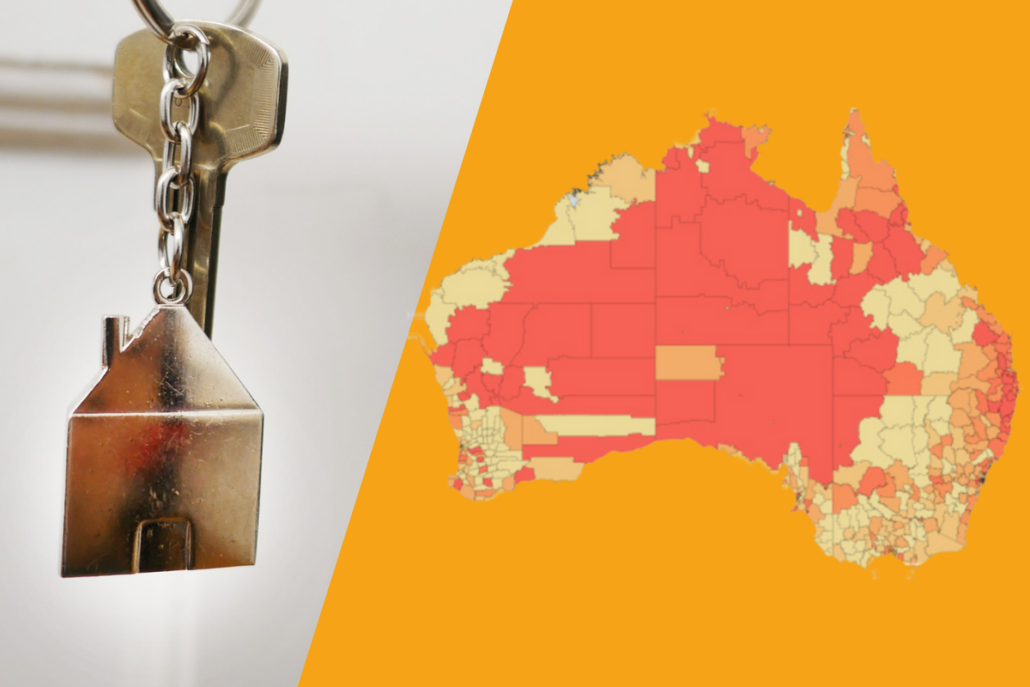
In WA, the ten worst affected Local Government Areas are Wiluna, where 47.5 per cent, or 100 households, are not appropriately housed. This is followed by Menzies (45.5 per cent), Laverton (42.5 per cent), Murchison (39 per cent), Upper Gascoyne (27.5 per cent), Carnamah (22.8 per cent), Mount Magnet (21.4 per cent), Sandstone (19.8 per cent), Morawa (18 per cent) and Shark Bay (17.9 per cent). All ten are regional areas.
The state electoral seats with the highest percentage of households facing unmet need included South West hot spots Mandurah, Dawesville and Bunbury, as well as the Premier’s electorate of Rockingham.

*Unmet need means households are either experiencing homelessness, living in overcrowded homes, or spending over 30 per cent of their income on rent.
Unmet Need
Shelter WA CEO Kath Snell said acute need and housing stress is being felt across the state.
“North and Midwest regions are experiencing unmet need.”
“From metro areas to the regions, too many residents in Western Australia are experiencing homelessness, living in overcrowded homes, or experiencing housing stress,” she said.
“This report shows that local government areas in our north and midwest regions are experiencing a very alarming level of unmet need.
“The East Kimberley region was already experiencing a high level of unmet need in WA, before the devastating floods. The recovery and rebuilding efforts need to factor this in.
“The report estimates in WA there will be at least 85,500 households in unmet need by 2041, and to meet this need, we will need to grow social and affordable housing stock by up to 8.7 per cent per year to meet current and projected demand,” Ms Snell concluded.
Additional Investment
CHIA CEO Wendy Hayhurst said the report highlighted the importance of a long term national housing strategy with clear targets to address the housing need right across Australia.
“There are currently 640,000 Australian households whose housing needs are not being met, and this figure is projected to increase to 940,000 by 2041,” she said.
“We will need to muster additional investment from Government.”
“The Commonwealth has laid important foundations for expanding social and affordable housing and it is reassuring to see them seriously grapple with this challenge. However we will need to muster additional investment from all levels of Government and superannuation funds to meet this challenge.
“It is hard to think of a higher priority than giving all Australians a stable and secure home.”
Quick Stats
The Community Housing Industry Association report found:
• On census night in 2021 Australian 640,000 low-income households were not in appropriate housing on census night. This is around one in fifteen households (6.6 per cent).
• These Australians were either experiencing homelessness, in overcrowded homes or spending over 30 per cent of their income on rent.
• Projecting this unmet need forward indicates that, by 2041, 940,000 households – or further 300,000 households – will not be living in appropriate housing.
• In WA this translates to at least 85,500 households in unmet need by 2041.
• To meet this need, stock will need to grow by between 2 – 9 per cent (or 200-900 dwellings) per year, per region, depending on the region.
Interactive Map (Unmet Housing Need (% of Total Households)
Media Enquiries
Chantal Caruso, Shelter WA | E: chantal@shelterwa.org.au | M: 0447 201 377.
*Unmet need means households are either experiencing homelessness, living in overcrowded homes, or spending over 30 per cent of their income on rent.