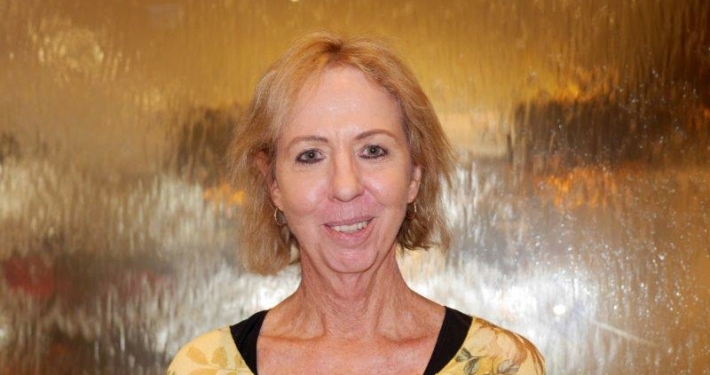
Going for a job interview can be a nervous experience but it’s not nerves which stick out most in Dr Shae Garwood’s mind when she arrived for her job interview at Shelter WA.
“I’m not sure what had actually happened but the premises (Claisebrook Lotteries House) had a lot of water damage,” Shae said. “They were ripping up carpet, and moving furniture into the hallway. Much of the place was renovated in those early years.”
Originally from the U.S. Shae had worked on affordable housing issues work prior to moving to Australia. She completed a Bachelor of Science at the University of Virginia, a Master of Science at the London School of Economics and completed her PhD at the University of Western Australia the same year she began working at Shelter WA.
“I always had plans to return to work for a not-for profit,” Shae said. “I wanted to apply my academic skills to social change and advocacy. Housing just fit in for me as I had already worked in that area in the U.S. and found it to be a critical way to affect broader change. Working on housing issues in Perth was a radically different setting to what I had been used to in the U.S..
“In the community where I was working prior to moving to Australia, we talked about a property being affordable if it was under $150,000 (USD) to purchase. So, the scale of the affordable housing crisis was much more significant here, and the speed at which it was getting worse was alarming. We knew the days of negative equity and mortgage defaults were coming, but we didn’t know when.”
During 2010 the Western Australian economy began to pick up after being hit hard by the 2008 Global Financial Crisis. Australian mining investment increased almost tenfold, from $9.7 billion in 2004 to $40 billion in 2010 to $94 billion in 2012. The federal government responded by approving more 457 visas to get overseas workers on the mines, public servants left modest wage jobs to head up to WA’s mining regions, school-leavers commanded six-figure salaries weeks after graduating and talkback lines jammed about the price of takeaway coffee.
The boom brought its own set of problems in terms of housing affordability and Shelter WA was struggling to catch up. Shae remembers it being “like a fast-moving train” and that it wasn’t popular to talk about wanting to bring prices back into line with something more sustainable.
“For people who owned their homes and bought homes prior to the boom, well they were enjoying the ride, it was a different context,” remembers Shae.
“It was a huge learning curve for me not only with the housing policy issues but with the landscape for a peak body. In the U.S., there are coalitions of organisations, that operate similarly to a peak body, but very rarely will they get any government funding, so the downside is you have to spend time and money securing private funding, but the upside is the independence from government makes it easier to advocate on controversial issues.
“This was a challenge for Shelter WA, as it is for other peaks, to ensure you’re being a strong advocate and have a strong voice, but are also meeting your funding obligations, which in our case, was to State Government.”
Despite the challenges “one of the beauties” about Shelter WA was the small team approach. “Sometimes the titles are irrelevant, you end up doing a lot of different things on any given day,” Shae said.
In the time Shae was at Shelter WA there were several projects on the go.
Work was being done on urban planning and tax policy. With tax being a huge driver around housing policy Shae said, “it was important for us to keep our voice out there and keep pushing on those issues”.
“We weren’t able to achieve big sweeping changes on tax, but some of the issues that were not being talked about by the major parties five years ago were being debated as part of the most recent federal election. This is due to sustained advocacy by Shelter WA and others.”
Legislative issues and policy changes around caravan parks were also catching the attention of Shelter WA. Along with Robert Gough (Policy Officer) Shae spoke to dozens of caravan park residents about their experiences. Around this time several caravan parks with long-stay facilities had closed leaving many seniors without secure accommodation. When the park was sold, residents had few alternatives, as they often spent their savings purchasing a park home or caravan, which may be unable to be moved, depending on its age and condition, and current legislative requirements.
The push to transfer public housing to community housing providers as part of the State Government’s Affordable Housing Strategy for Shae was “a lost opportunity”.
“There was a lot of optimism early on that community housing providers were on the cusp of not only getting a lot of the asset transfers but growing in a significant way,” notes Shae.
But despite major announcements along with the promises of transferring assets and the launch of the Affordable Housing Strategy, the large-scale transfers and growth didn’t eventuate. In fact, there was an overall net loss of social housing.
“This could have been a time to really revitalise and invest in growing the social housing system,” said Shae.
“There were some new developments and new things built mostly with stimulus money at the time, but public housing was also being sold off at fast rates which were often not reported. At that time there were over 20,000 people on the waitlist, yet there was a net loss of social housing in WA. They were dark days for social housing.”
While social housing was a tough slog there were many positives taking place.
“WA is now doing some great things around inclusionary zoning and Shelter WA has contributed to keeping the issues live and celebrating when the state government does something positive,” Shae said.
“There were changes to the First Home Owner Grant at the time, and we were looking at how the Grants could be used in a better way either through a means test or with a focus on stimulating supply. More generally Shelter WA was always part of the conversation, we were at the table when a number of different policy initiatives would come up and just being part of conversations to keep the state government focused on the needs of low to moderate income households.
“These might sound like small successes, but they are part of a longer process. Advocacy takes time, and Shelter WA was in it for the