The Rental Affordability Index (RAI) is an annual report produced by SGS Economics in partnership with National Shelter and Housing all Australians.

The RAI report is useful for tracking trends in rental affordability over time nationally and in Western Australia, with data available at a local and regional scale. The RAI models a range of typical households and income levels to highlight the varying levels of housing stress facing renters, with a spotlight on low and moderate income households.

Info-circled Info-circled

What is the RAI?

The RAI an indicator of rental affordability relative to household incomes.

It uses the 30 per cent of income rule. Rental affordability is calculated using the following equation:

RAI = (Income/qualifying income )*100

Households paying 30 per cent of income on rent have a RAI score of 100, indicating these households are at the critical threshold level for housing stress.

Info-circled Info-circled

Latest RAI report: November 2025

The 11th annual Rental Affordability Index found Perth has retained its position as Australia’s most unaffordable capital for renters, while regional WA saw the steepest decline in affordability in the country. The RAI shows Perth is more unaffordable than Sydney for a second straight year. Among Australia’s capital cities, Perth had the largest drop in affordability, down a further 4% from last year’s record low.

The Index found Perth’s median rent now consumes 32% of an average rental household’s income. This is up from 21% in 2020, and currently higher than Sydney and Adelaide at 30%.

Meanwhile, rental affordability in regional WA has crashed to its lowest level in more than a decade. Regional WA saw the steepest annual drop in affordability compared to all capital cities and regions, down a further 5% from last year.

Online Report:

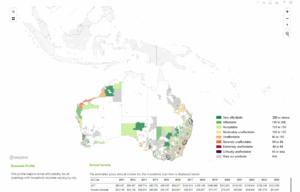
Interactive Map:

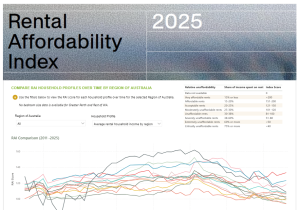
Interactive Dashboard:

© 2026 Shelter WA. All rights reserved. ABN 43 436 576 540. Shelter WA acknowledges the Traditional Custodians of Country and their ongoing connection to land, waters and community. We pay our respects to all Aboriginal and Torres Strait Islander peoples and to the Elders past and present and emerging. We support the Uluru Statement from the Heart and our recognition and acceptance of your invitation to walk with you towards a movement of the Australian people for a better future.
Skip to content